Wargame
A strategy game simulating armed conflict for training or recreation.

Rolf Nohr, Ralf Wegemann · CC BY-SA 4.0
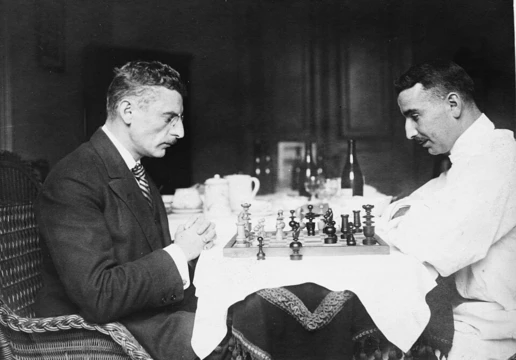
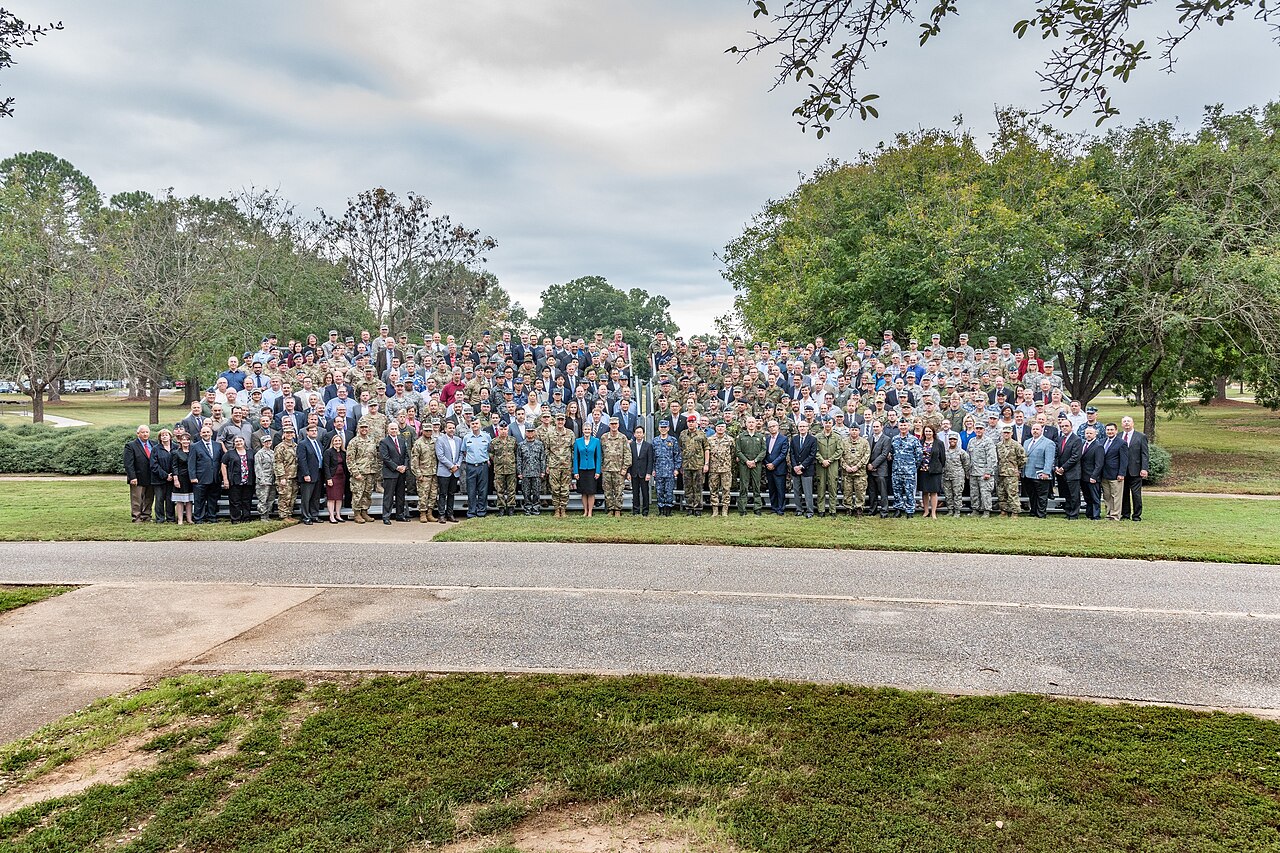
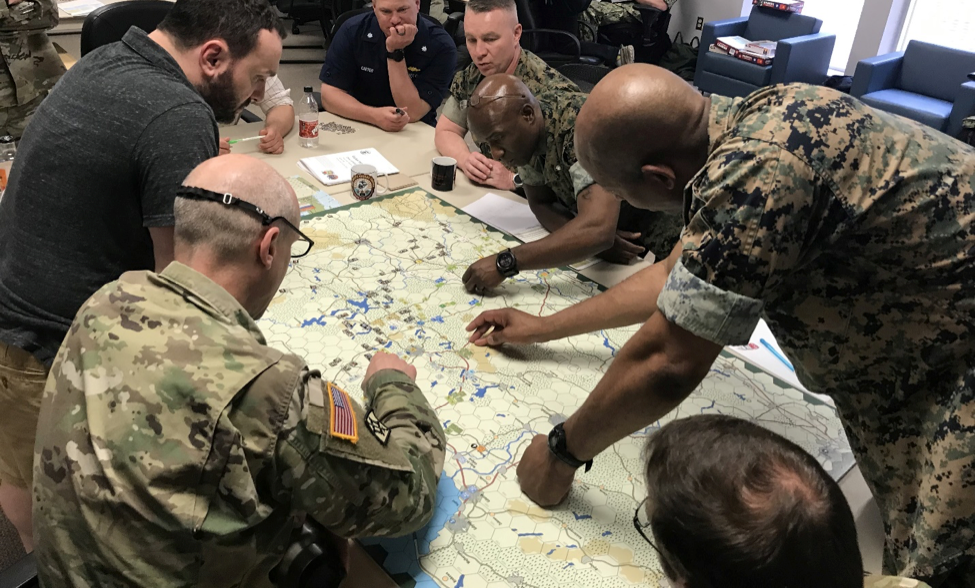
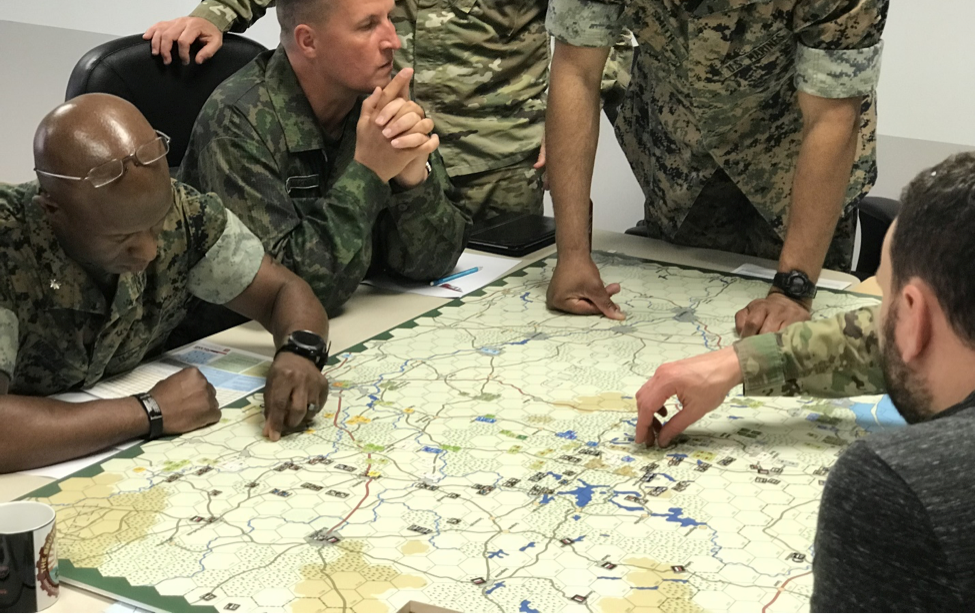
A wargame is a strategy game simulating armed conflict, used for recreation, military training, or studying potential conflicts. Modern wargaming originated in Prussia in the early 19th century and was later adopted by militaries worldwide after the Franco-Prussian War.
- field
- Strategy gaming, military training
- known_for
- Simulating armed conflicts for recreation, training, and research
- origin
- Prussia, early 19th century
- types
- Professional (military) and recreational (civilian)
Lore & Background
Wargames simulate armed conflicts, from battles to entire wars, and are adversarial by nature, requiring at least two opposing sides. They do not involve actual troops or armaments, though some use the term 'live wargames' for field exercises. Settings range from historical eras to fantasy or hypothetical futures, with scenarios that may be balanced or historically imbalanced. Levels of war include tactical (single battle, minutes), operational (campaign), and strategic (entire war, months or years).
Reader's Guide
Wargaming's significance lies in its dual role as both a professional military tool and a recreational hobby. Professional wargames, used for training and research, emphasize realism and current events but face challenges from secrecy, small player bases, and classified data, leading to persistent errors. Recreational wargames, popularized by consumer electronic versions in the 1990s, prioritize enjoyable gameplay and often cover diverse subjects, including fantasy. The distinction between the two is marked by development processes: professional games are commissioned and must juggle competing demands, while commercial games are designed with a take-it-or-leave-it approach. Despite these differences, both types rely on umpires or players for manual arbitration, with professional games often using simpler models due to officers' inexperience. Wargaming has shaped military doctrine since Prussia's adoption and continues to influence strategic thinking.
Did You Know?
- Modern wargaming was invented in Prussia in the early 19th century.
- The US Naval War College defines wargames as not involving actual troops and armaments.
- Recreational wargames can cover fantasy or sci-fi combat, not just historical settings.
- Professional wargames often have simple models because military officers typically have little wargaming experience.
The Physical Toolkit of the Table
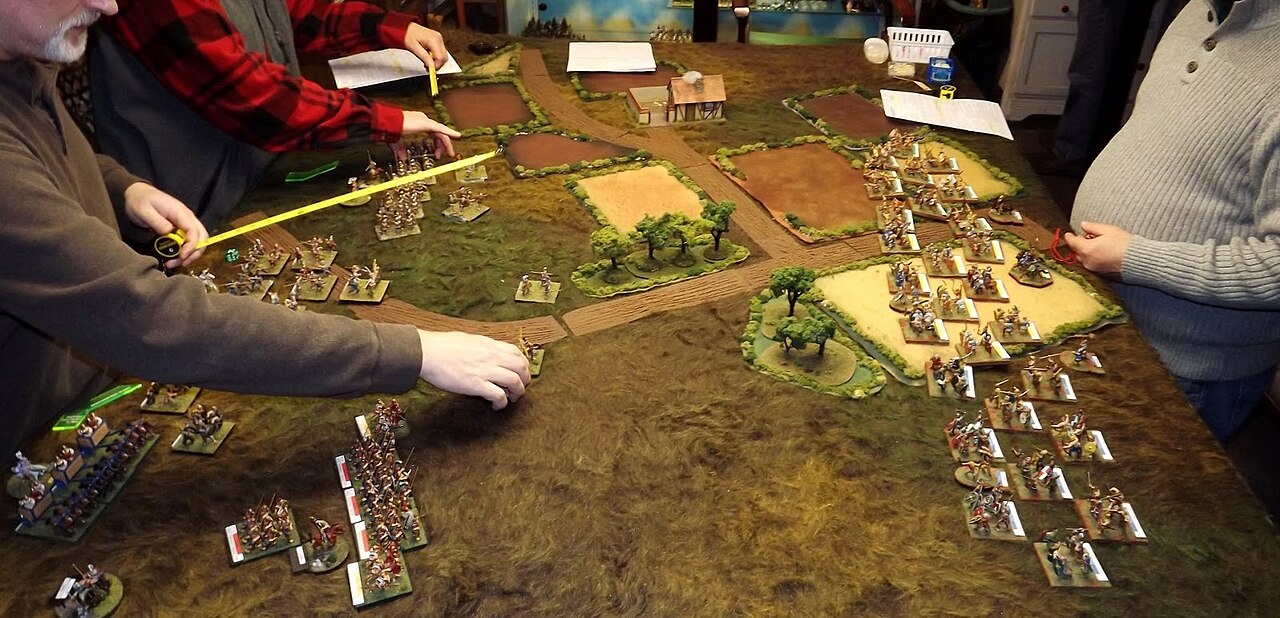
The components that make up a tabletop game form an almost astonishingly diverse toolkit, stretching from the ancient to the hyper-modern. At the most basic level, a game might rely on a board, a set of pawns or miniature figures, and a rulebook. But the full inventory of possible pieces runs far deeper. Timing devices range from a simple egg timer to a stopwatch or hourglass. Scoring can be tracked with cardboard counters, dial counters, pegs, or a dedicated scoreboard. Randomness is introduced through an equally wide palette: standard dice, polyhedral dice, coins, spinners, tops like Teetotums and Dreidels, drawstring bags, and even the bones, cowrie shells, and stick dice that powered ancient games. For card-based titles, the ecosystem expands to include collectible cards, card sleeves for crafting systems, shuffling machines, and stickers that mark progression in Legacy-style games. Role-playing and refereed games add their own layer: gamemaster's screens, campaign settings, scenario packs, and supplementary manuals. Even modelling clay and rulers find a place at the table, reminding us that the tactile, hands-on nature of tabletop play is a core part of its identity.
The Architecture of Uncertainty
Tabletop games can be sorted not just by what sits on the table but by how uncertainty is woven into their rules. Game theory identifies two fundamentally distinct kinds of chance that shape play. The first is outcome uncertainty: even when every player sees the full state of the board, the result of a given action may still be unpredictable. A roll of the dice or the draw of a hidden card introduces this randomness, and games built around such mechanics are called stochastic, in contrast to fully deterministic ones. The second kind is state uncertainty, where information itself is withheld. An opponent's hand of cards stays face-down, a hidden position on the map cannot be seen, or moves are made simultaneously so neither player knows the other's choice before committing. These are partial or imperfect information games, as opposed to full or perfect information games where every detail is visible to all. A single title like Monopoly or a modern eurogame can blend both types of uncertainty, making it impossible to slot neatly into one category and highlighting how layered the design space of tabletop gaming truly is.
The Living Community
Beyond the table itself, tabletop gaming is sustained by a sprawling network of organizations, conventions, and grassroots groups. Major industry players like Wizards of the Coast steward the RPGA, while White Wolf Publishing's Camarilla has long served the role-playing scene. Board Game Geek runs BGG.CON, and PAX dedicates its Unplugged segment to tabletop play. Geek & Sundry champions an annual International TableTop Day, and the Historical Miniatures Gaming Society organizes events like Historicon specifically for wargaming enthusiasts. For those still developing their designs, SaltCON LLC hosts both a convention and the Ion Award competition, which spotlights unpublished tabletop games. The Organization of Gamers and Roleplaying Enthusiasts, known as O.G.R.E.s, puts on events for OMGcon. Yet the most numerous layer is the local: countless independent, player-run groups gather in living rooms and community centers, and many colleges maintain student organizations devoted entirely to tabletop gaming. The Collegiate Association of Table Top Gamers, with chapters at various schools, is one example of how the hobby embeds itself in academic life.
Crossing into the Digital Realm
The boundary between physical and digital tabletop gaming has grown increasingly porous. Digital tabletop games encompass a broad spectrum of approaches, from straightforward digital reproductions of existing physical games to video games that borrow tabletop design principles as a core part of their mechanics. A third category, the tabletop simulator, offers a virtual table where players can conduct sessions of role-playing or wargaming entirely online, replicating the shared-space experience of a physical table without requiring everyone to be in the same room. This digital layer does not replace the tactile world of meeples, dice towers, and paper rulebooks; rather, it extends the reach of the hobby. A player in one time zone can pass a virtual token across a digital board to a friend on another continent, or a game designer can test a prototype with a scattered group of playtesters. The result is a hybrid culture in which the ancient act of gathering around a flat surface to play has found new, screen-based expressions while retaining the social and strategic heart of the original tabletop tradition.
Gallery
Frequently Asked Questions
What is a wargame?
A wargame is a strategy tabletop game that models armed conflict between opposing forces. Players make tactical and strategic decisions to simulate how battles or entire campaigns might unfold.
Where did wargames originate?
The modern tradition of wargaming began in Prussia during the early 1800s, where military officers used tabletop simulations to rehearse and analyze potential engagements.
What are the two main categories of wargames?
Wargames split into professional versions designed for military training and recreational versions played by civilians for hobby and entertainment purposes.
Why did militaries worldwide adopt wargames after the Franco-Prussian War?
The Prussian success in that conflict demonstrated the practical value of tabletop conflict simulation, prompting armed forces around the world to incorporate wargaming into their officer training programs.
What makes wargames different from other strategy games?
Unlike generic strategy titles, wargames specifically model the mechanics of armed combat—unit movement, terrain effects, and force-on-force engagement—making them tools for studying real-world military scenarios.
More in Card & Tabletop Games 25-32
Elsewhere in the Card & Tabletop Games universe
Spotted an error? Know more?
This is a living reference — every entry is fact-audited, and reader corrections feed straight into our audit queue. Suggest an edit · See this site's audit record