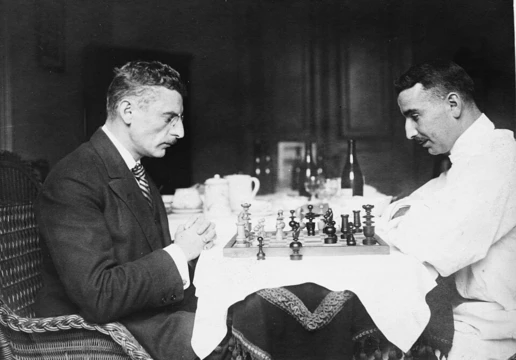
Social deduction game
Players deduce hidden roles through logic and bluffing.

Daniel Mizieliński · CC BY-SA 3.0
A social deduction game is a game, typically a card game, board game, or video game, in which players attempt to uncover each other's hidden role or team allegiance. Commonly, these games are played with teams, with one team considered 'good' and another 'bad', though some games have multiple teams or unique hidden roles for every player. During gameplay, players use logic and deductive reasoning to deduce roles, while others bluff to avoid suspicion. The genre has been loosely defined as one where discussion is split between private knowledge and a 'public square' phase for accusations.
- rise_in_prominence
- Late 2010s
- common_team_structure
- Good vs. Bad teams
Lore & Background
Social deduction games grew out of earlier party games such as wink murder, where a secretly selected player kills others by winking. A more prominent early example was Mafia, also known as Werewolf, which began as an academic psychological experiment in Russia before becoming a popular card game using 'good' and 'bad' teams. Mafia and its variants grew in popularity, with multiple versions published in the 2000s, such as Ultimate Werewolf. As social deduction games evolved in the 2000s, they were designed to remove negative elements of Mafia, such as long periods where eliminated players could not participate or the need for a non-playing referee.
Reader's Guide
Social deduction games have been adapted to video games through mods or full games, including custom maps for StarCraft: Brood War (Changeling and The Thing) that inspired later Warcraft III custom maps. PC Gamer's Wes Fenlon claimed that Among Us brought improvements by adding active tasks for players to complete alongside the social deduction. The significance of social deduction games lies in their blend of logic, bluffing, and social interaction, with multiple rounds introducing a strong meta-gaming component where players consider past and future actions.
Did You Know?
- Mafia began as an academic psychological experiment in Russia before becoming a popular card game.
Core Mechanics and Strategic Depth
A social deduction game is fundamentally a contest of hidden identity. Players are typically divided into a "good" team and a "bad" team, though some titles assign a unique secret role to every participant. The core tension arises from the split between private knowledge—what each player knows about their own role—and a public discussion phase where accusations and revelations unfold. During this public square, players wield logic and deductive reasoning to piece together who belongs to which side, while those bluffing work to mislead and deflect suspicion. Strategy extends well beyond a single round. One critical decision is how long a player should maintain a fabricated story once new information surfaces from others. The genre has even attracted academic attention, with Monte Carlo tree search proposed as a decision-making framework. Furthermore, when the same group competes across multiple sessions, a powerful meta-gaming layer emerges: participants must consider not only how to win the current game but also how opponents behaved in prior rounds and how they might need to adapt if teams shift in future encounters.
Roots in Parlour Games and the Mafia Legacy
The social deduction genre did not emerge in a vacuum. It grew out of older parlour and party games like wink murder, in which a secretly chosen player could "kill" others simply by winking, while the rest tried to identify the killer. The 1975 manga series They Were Eleven is also cited as a narrative precursor to later titles such as Raging Loop, Among Us, and Gnosia. The first widely recognized social deduction game was Hoax, released in 1981. Unlike later team-based designs, Hoax had no teams at all; each of the seven possible characters could be genuine or a lie, and players had to either deduce the truth or convincingly bluff. The genre's most influential title, however, was Mafia (also known as Werewolf), which originated as an academic psychological experiment in Russia before being formalized into a card game. It introduced the now-standard "good" versus "bad" team structure. By the 2000s, multiple editions like Ultimate Werewolf kept the game alive, and by 2010, Wired's Margaret Robinson noted that Mafia had "infected almost every significant tech event around the world." Matt Casey of Boing Boing argued in 2014 that virtually every social deduction game since draws at least some inspiration from Mafia.
The Digital Revolution and Among Us
As the 2000s progressed, social deduction concepts migrated into digital spaces. Custom maps for StarCraft: Brood War, including Changeling and The Thing, were among the earliest video-game adaptations, and they in turn inspired Warcraft III community maps such as "Mafia," "Werewolf," and "Zerg Infestation." The genre continued to expand through titles like Space Station 13 (2003), Garry's Mod's "Trouble in Terrorist Town" mode, Town of Salem (2014), StarCraft II's Phantom Mode mod, Raging Loop (2015), and Gnosia (2019). Among Us, released in 2018, experienced an explosive surge in popularity during 2020, with the COVID-19 pandemic frequently cited as a catalyst, since the game let friends socialize while maintaining physical distance. PC Gamer's Wes Fenlon observed that Among Us distinguished itself from both Mafia-inspired tabletop games and earlier video-game copies of those mechanics by layering active, task-based gameplay alongside the social deduction, giving players something concrete to do between discussions.
From Living Rooms to Television Screens
The hidden-identity premise of social deduction games has proven equally compelling on television. Belgium's De Mol, which debuted in 1998, established the format of a group of contestants in which one is secretly a "Mole" working against the others. The franchise was adapted internationally, appearing in the Netherlands as Wie is de Mol?, in Poland as Agent, and in the United States, Australia, and the United Kingdom as The Mole. Other TV examples include the British children's show Trapped! (2007), in which one contestant is a hidden Saboteur, and the 2021 American quiz show The Hustler, where a single contestant is secretly handed the correct answers in advance. The Traitors, a reality franchise explicitly based on Werewolf and Mafia, first aired in the Netherlands in 2021 as De Verraders and has since been localized in more than thirty countries. More recently, Netflix's Million Dollar Secret (2025) tasks contestants with identifying and eliminating the player holding a million-dollar prize, with the holder winning if they survive to the end.
Gallery
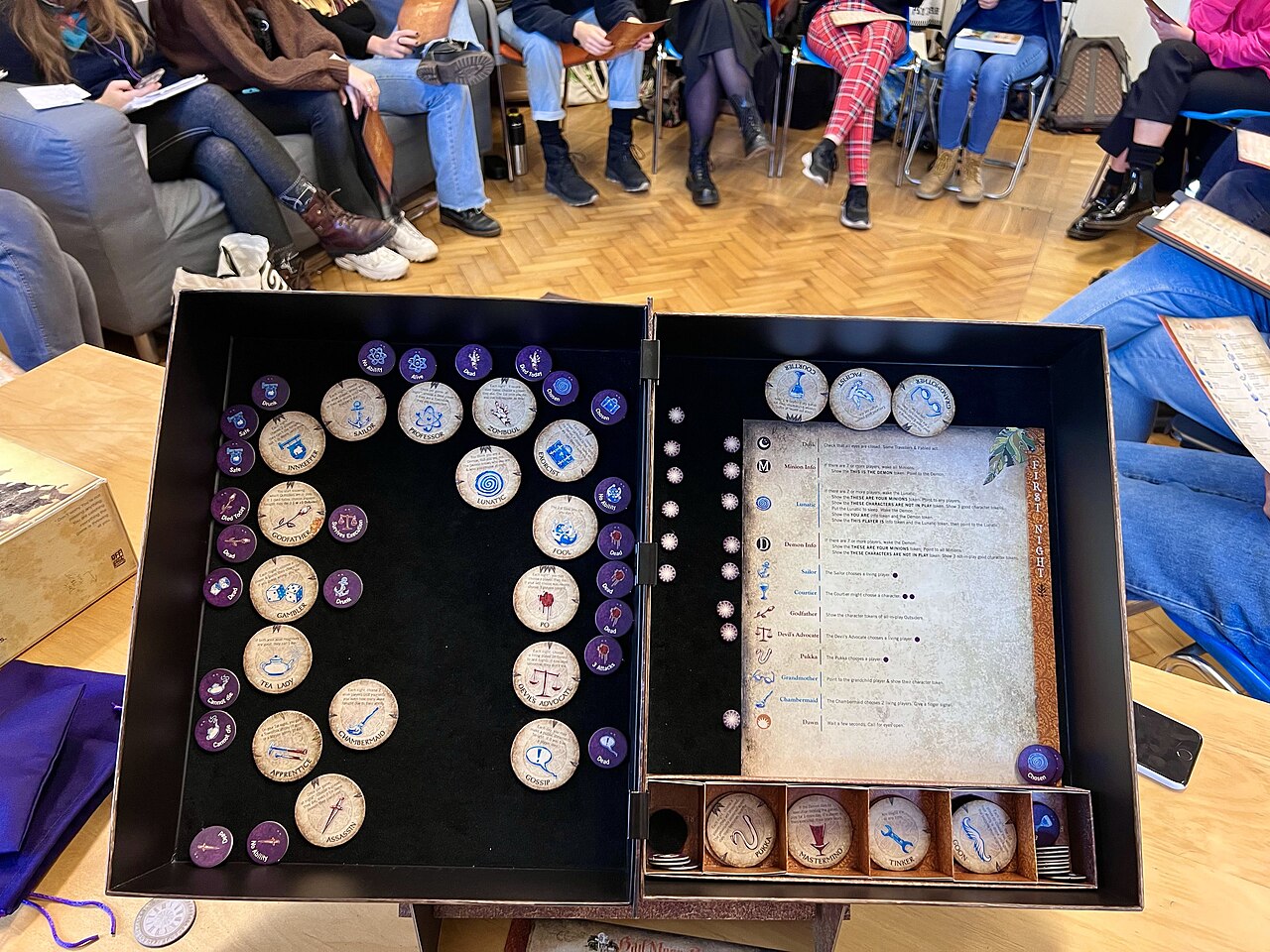



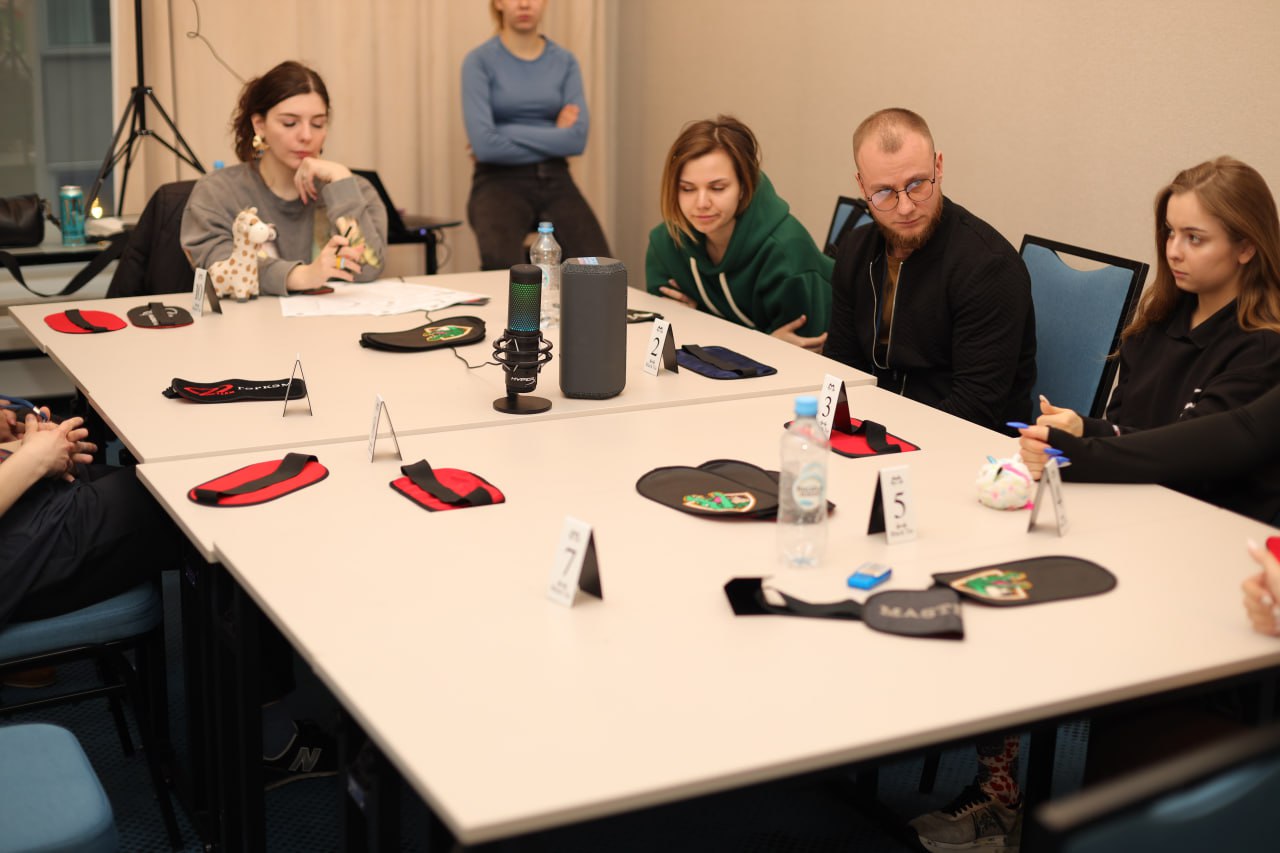
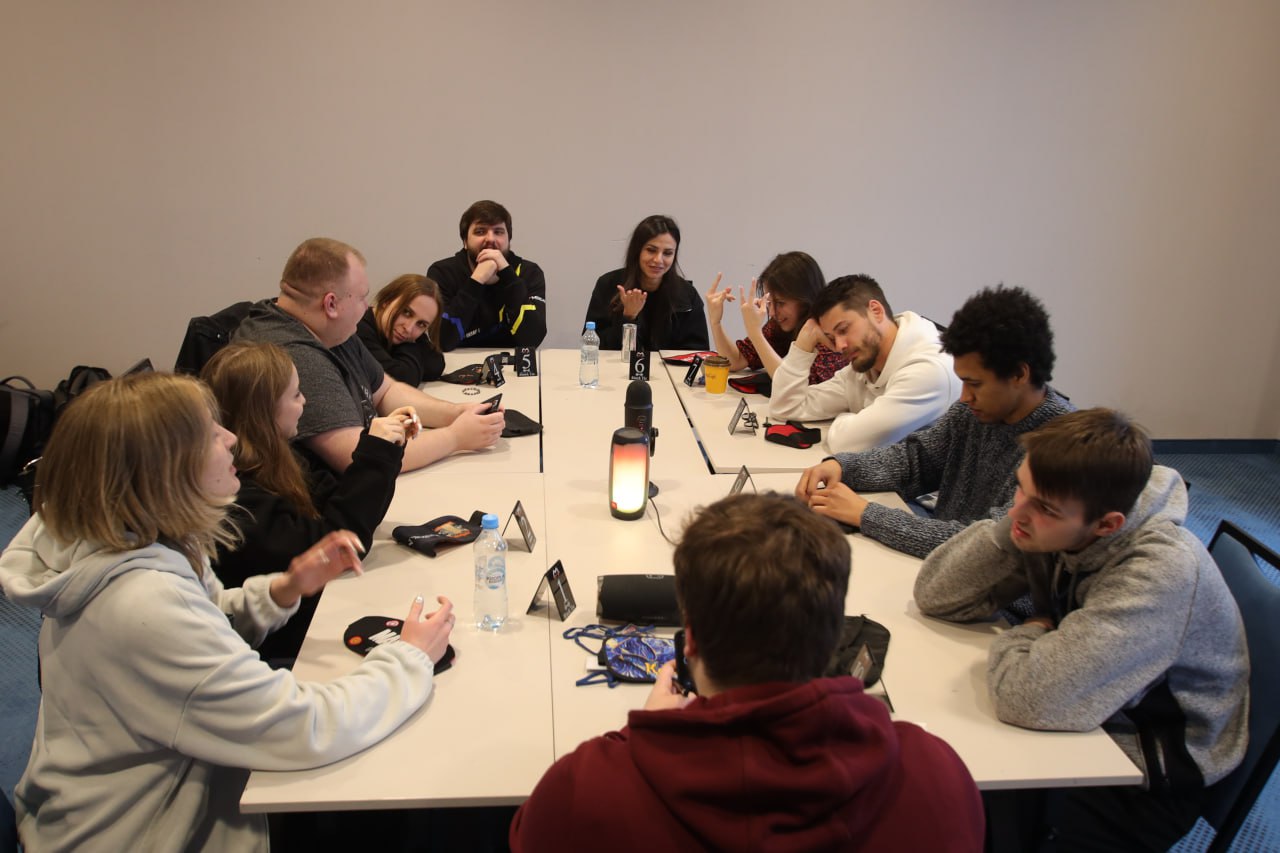
Frequently Asked Questions
What is a social deduction game?
It is a genre of card, board, or video games in which each player holds a secret role or team allegiance that others must try to uncover. The core tension comes from mixing logical deduction with deliberate bluffing, usually across a mix of private knowledge and a shared public-discussion phase.
How do you actually play a social deduction game?
Players are typically split into a 'good' side and a 'bad' side, then alternate between reasoning privately and debating openly in a public square where accusations and votes happen. Success depends on reading others' behavior, building logical arguments, and convincing the group of a false story when you're on the wrong side.
Why did social deduction games explode in popularity in the late 2010s?
The genre's rise in prominence during that period was fueled by accessible digital titles like Among Us that made the bluff-and-accuse loop easy to stream and share with friends. Its emphasis on real-time social interaction and reading human behavior gave it a natural fit for online group play and content creation.
Do all social deduction games use a simple good-vs-bad split?
Most follow that binary team structure, but the genre is loosely defined enough to include games with multiple factions or a unique hidden role for every single player. What ties the category together is the hidden-allegiance mechanic rather than any one specific team layout.
More in Card & Tabletop Games 1-24
Elsewhere in the Card & Tabletop Games universe
Spotted an error? Know more?
This is a living reference — every entry is fact-audited, and reader corrections feed straight into our audit queue. Suggest an edit · See this site's audit record